
How the Swiss Smart Factory is testing human-centric demanufacturing workflows using real industrial products, smart sensors and digital traceability.
- Overview
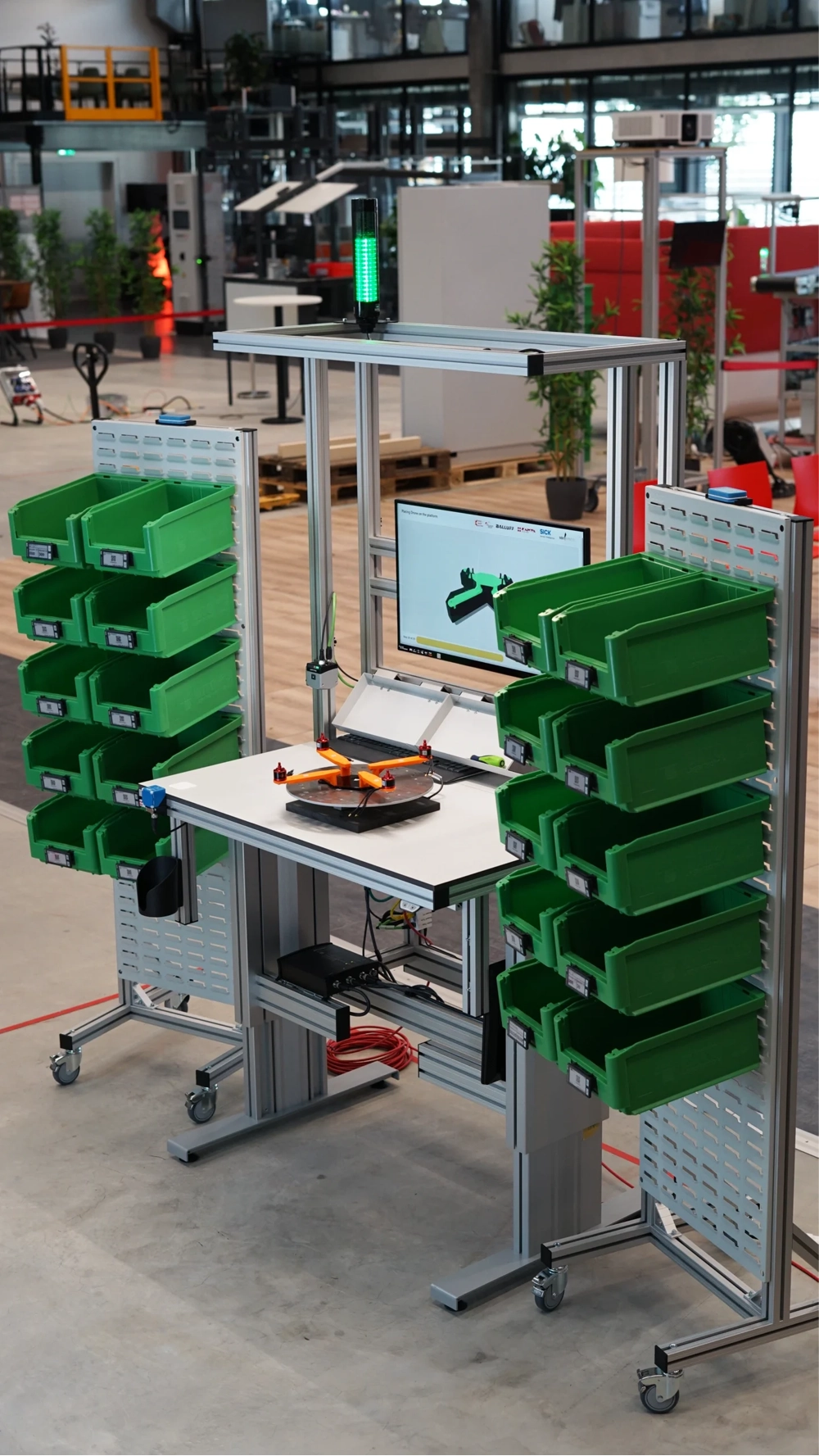
The Swiss Smart Factory developed a semi-automated demanufacturing workstation to explore how returned, used or end-of-life products can be disassembled, assessed and redirected toward reuse, repair, recycling or disposal.
The station combines operator guidance, product identification, sensor data and digital traceability. Instead of aiming for full automation, the approach focuses on a hybrid workflow where human expertise is supported by smart tools and structured decision-making.
- The Challenge
Demanufacturing is difficult to industrialise because returned products are rarely identical. Their condition, configuration, level of damage and available product information can vary significantly.
For SMEs, fully automated disassembly is often too rigid, too expensive or too complex to deploy. A more realistic approach is to support operators with adaptable instructions, product data, smart sensors and decision-support tools.
This is especially relevant for circular manufacturing, where companies need to decide whether components should be reused, repaired, recycled or discarded.
- The Approach
The demanufacturing workstation was designed as a modular and flexible setup where the operator is guided step by step through the disassembly process.
The current station uses product information and sensor feedback to structure the workflow. The product can be identified, weighed, checked and documented during the process. The objective is to reduce manual uncertainty while keeping the flexibility needed for products with different conditions and configurations.
The next development step is to automate part of the creation of disassembly instructions by using existing product and manufacturing knowledge, such as Digital Product Passports, Asset Administration Shells, digital twins and knowledge-based decision support.
- System Architecture
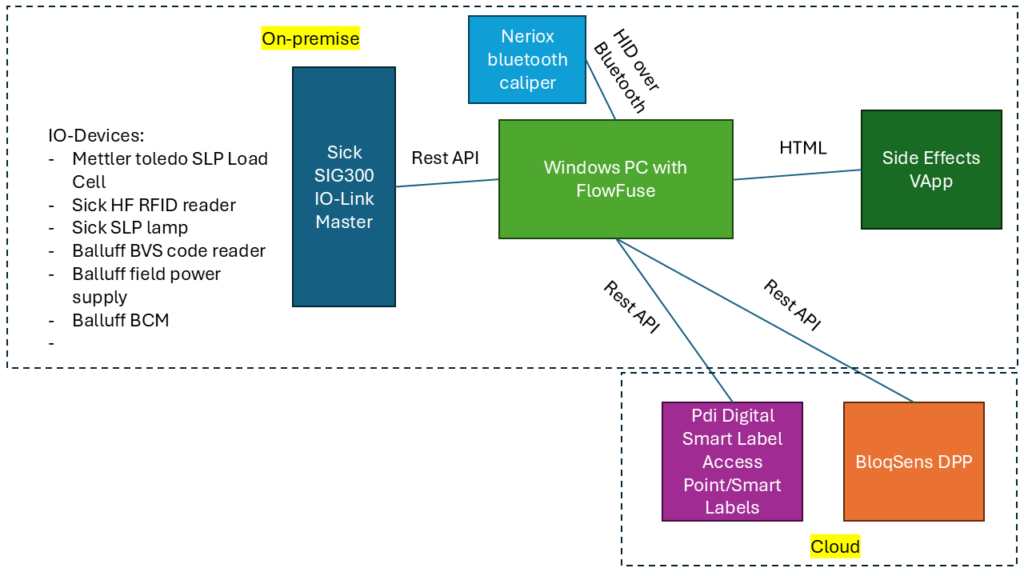
The architecture connects the physical workstation with digital services. It includes an IO-Link infrastructure, RFID identification, code reading, weighing, condition monitoring, operator guidance and Digital Product Passport access.
- Implementation Workflow
Product identification
The product or component is identified using RFID, QR code or smart label technologies.
Guided disassembly
The operator follows structured disassembly instructions supported by a digital interface.
Sensor-based documentation
Weight, identification data and process feedback are captured during the operation.
Component assessment
Each component is assessed to determine whether it can be reused, repaired, recycled or discarded.
Traceability update
Relevant information can be linked to a Digital Product Passport to document the product lifecycle and support future circularity decisions.
Results & Current Status
The workstation is currently being tested and validated at the Swiss Smart Factory using a real industrial product. The objective is not yet to present a fully deployed customer solution, but to validate the workflow, identify bottlenecks and understand which functionalities are required to make demanufacturing more practical for industrial SMEs.
- Related Resources
- Partners